

The WhatsApp Message That Became Rooki
In 2024, someone sent my mom a WhatsApp message pretending to be my sister. They asked for money, and she came close to making a Pix transfer.
The transfer didn't happen. But I kept thinking about how ordinary the situation was. A familiar name on a phone screen. A request that sounded urgent. A few seconds to decide whether to trust it.
I work in cybersecurity, and watching a scam reach my own family made the problem feel different. People are expected to recognize fraud while someone is actively trying to confuse or rush them.
That was the beginning of Rooki.
We started with a simple idea: give people somewhere to ask for a second opinion before they click, reply, or send money.
The first version worked through WhatsApp. We tested it with around 40 people and processed more than 1,000 messages.
Those early tests made us think about something basic. A technically correct answer can still be useless if the person reading it doesn't understand what to do next.
Building the product took longer than I'd have liked. We had to work through the technology, development decisions, and changes in direction. All of that happened alongside my full-time job, postgraduate studies, and being a dad.
There were periods when the easiest option would have been to leave the idea where it was.
We kept working on it because the original problem hadn't gone away.
Today, Rooki is on the App Store.
Our first iPhone app is officially available.
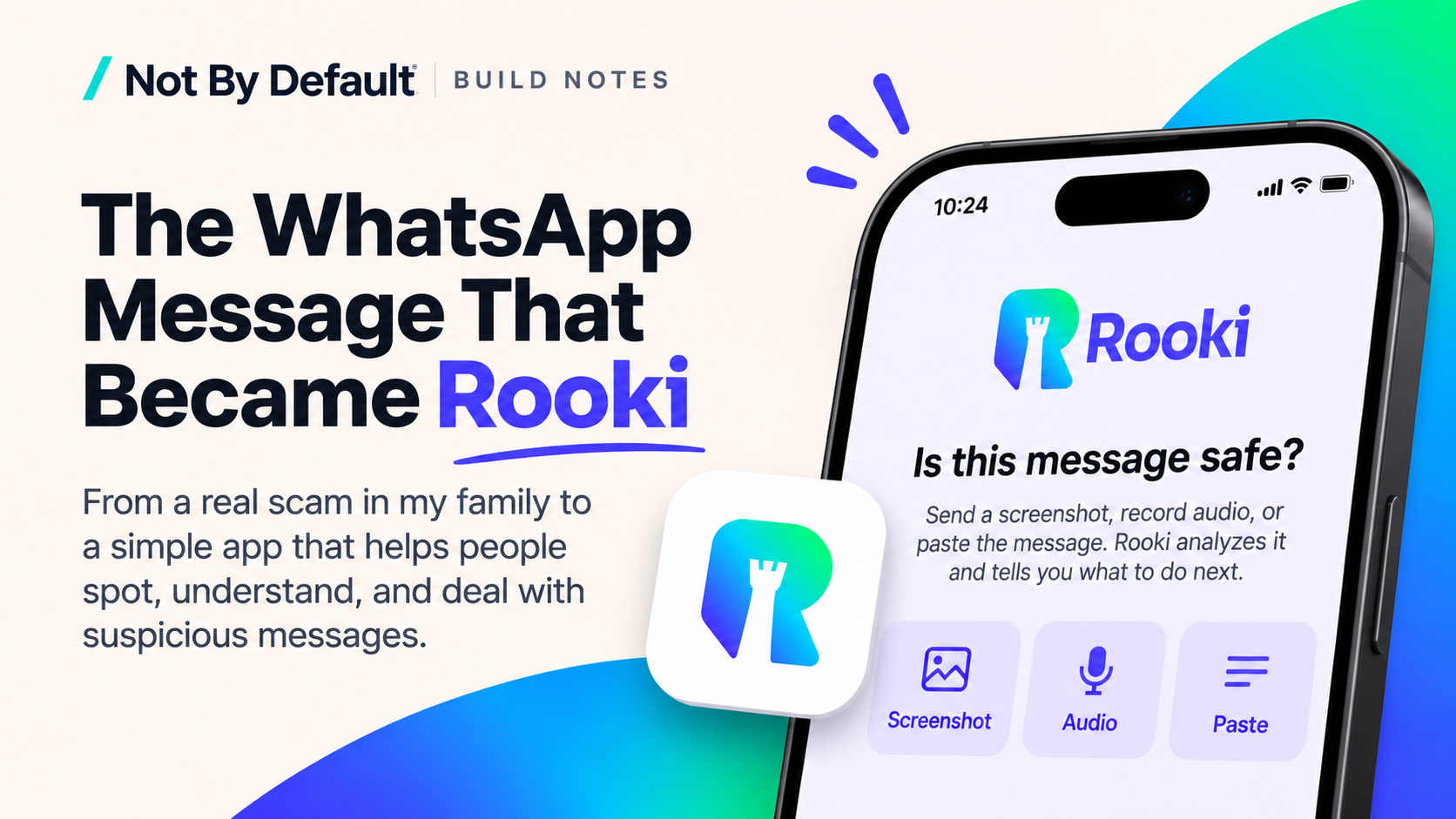
You can send a screenshot, record audio, or paste a suspicious message. Rooki points out warning signs, explains the level of risk in plain language, and suggests what to do next.
We also included short lessons about common scams in Brazil, regional alerts, and guidance for people who have already been scammed.
We built it with people in mind who don't spend their days thinking about cybersecurity.
My mom shouldn't need to learn security terminology to decide whether a message deserves her trust.
And we're aware of the limitations. Rooki can flag suspicious patterns and help someone think through a situation, but it can't promise to identify every scam. Verifying through an official channel still matters.
Now comes the part we can't build alone.
Getting Rooki into people's hands.
Publishing the app feels good, of course. But we still need to learn whether people understand it, when they reach for it, and where it fails them.
We can spend months discussing features among ourselves. Actual users will show us what we're missing.
That's why I'm asking for your help.
If you have an iPhone, download Rooki and give it a try. You can make three analyses for free, without creating an account.
Try it with a suspicious message you're comfortable sharing. Explore the lessons. Tell us what feels confusing, useful, or unnecessary.
And if you know someone who often hesitates over a strange message, show them the app. I'd especially like to know whether they can use it without anyone explaining it first.
Download Rooki on the App Store
Android is on the way.
We're proud of what we've built so far, and there's still plenty to improve. The next decisions should come from seeing how people actually use Rooki.
That's what we want to learn now.
About the author
- I'm Victor “Vitão” Fernandes, a data protection professional working across architecture, implementation, and operations in the Microsoft ecosystem. My focus is understanding what needs protecting, choosing the right controls, and verifying how they work in practice. I write Not by Default to share the thinking behind technical decisions, not just the configuration steps.
Comments
Join the discussionNo comments yet. Be the first to comment.
Build Notes
Notes from building products, testing ideas, and making decisions with imperfect information. What I tried, what actually happened, and what I'd do differently. The unfinished work belongs here too.